
AI Agent Development Services For Workflow Automation
AI agent development services make sense when the work is too complex for a static chatbot and too judgment-heavy for ordinary automation. Your team needs an agent that can understand context, use approved tools, follow business rules, and hand off when the workflow needs a person.
"*" indicates required fields
"*" indicates required fields


AI Agent Development Services For Work That Needs More Than A Chatbot
Traditional automation follows a fixed path. A chatbot answers a question or collects information. An AI agent can coordinate a sequence of steps when the rules, data sources, permissions, and escalation points are defined clearly enough.
That distinction matters. A useful agent may look up a customer record, retrieve the right policy, classify the request, draft the next action, update a ticket, route the case, and log what happened. The agent is not replacing the business process. It is operating inside a process your team controls.
Your AI agent development plan should stay tied to workflow design, software architecture, analytics, and adoption. Your agent should know what it can do, what it cannot do, what evidence it can use, which systems it can access, and when the safest answer is escalation.
What Our AI Agent Development Services Include
The tabs below detail each workstream: use-case discovery, architecture, integrations, pilot design, enterprise scaling, security, compliance, and ongoing agentic AI development.

AI Agent Development Services That Start With Your Use Cases
Your operations team already knows where the time leaks. The bigger risk with AI agent development services is starting anywhere else, and Gartner’s 2025 survey of 782 infrastructure leaders found only 28% of AI initiatives fully deliver on ROI while 57% of leaders reported at least one AI failure tied to unrealistic expectations. Discovery workshops exist to cut that risk before the first sprint.
- Your highest-volume workflows audited first (support triage, data lookup, RFP assembly) so the first agent lands where time actually leaks
- Your existing tools inventoried (CRM, ticketing, knowledge base) so the agent reads from what you already run instead of creating a parallel system
- Your current automations reviewed for overlap, so the agent fills a real gap instead of duplicating a rule-based bot already in place
- Your AI agent use cases scored against ROI, data readiness, and change-management weight, with input from our custom AI development work before a build decision locks in
- Your stakeholders aligned on what success looks like at each phase of the build, so disagreement about outcomes does not ambush the project later
You leave the workshop with a ranked use case, an accountable owner for it, and a clear definition of success that doesn’t have to get invented later under pressure.
AI Agent Architecture And Guardrails That Hold At Enterprise Scale
Your agent goes off the rails differently at scale than in demo. OWASP’s 2025 Top 10 for LLM Applications ranks prompt injection as the #1 production risk (Obsidian Security reported it in 73% of the deployments it audited), which is why AI agent architecture has to carry the load when the model, the tools, or the user misbehaves.
- Your model selection scoped to the task, with smaller models for classification and larger ones for reasoning, rather than paying for one expensive default everywhere
- Your guardrails layered in code (input validation, output schema checks, refusal triggers, content filters) not left to prompt language alone
- Your agent’s tool access scoped to least privilege, with every external call logged and rate-limited against the same controls that protect your existing APIs
- Your memory layer designed with retention, redaction, and retrieval rules that match the patterns we ship inside our AI chatbot work for regulated clients
- Your failure modes rehearsed before launch, so the agent has a defined answer when a tool is down, a claim is unverifiable, or a user asks outside scope
Your agent ships with a defined answer for every case where the model, the data, or the user asks something it should not respond to.
AI Agent Integration Into The Systems Your Teams Already Run
Your data, not your model, is where most AI agent integration failures actually happen. Connecting an agent to Salesforce, HubSpot, NetSuite, or the ticket queue takes engineering discipline most enterprise stacks have not automated away, and MuleSoft’s 2025 Connectivity Benchmark puts the annual drag at $6.8 million per organization in lost productivity and delayed projects. The work needs to land once, with audit trails, rather than patched ticket by ticket.
- Your Salesforce, HubSpot, NetSuite, or Dynamics instance connected through authenticated APIs that honor your existing role-based permissions
- Your knowledge base indexed with retrieval-augmented patterns, so answers cite source documents instead of fabricating
- Your ticketing, ERP, and analytics events piped into the agent’s context window through a monitored data layer
- Your user actions captured for audit (every tool call, every data write, every escalation) so the integration carries the same trace our web development and API integration work ships across the rest of your stack
- Your integration layer observed for latency, error rate, and drift, with alerts routed to the same on-call channels your ops team already watches
Data pipelines, permission model, and audit logs stay intact once the agent starts reading and writing against live systems.
Custom AI Agent Development Proven In A Measured Pilot
Your pilot is where custom AI agent development either earns the next budget cycle or disappears. Gartner forecasts that 30% of generative AI projects will be abandoned after proof of concept by end of 2025 because of poor data quality, thin risk controls, escalating costs, or business value no one can explain. A measured pilot prevents that specific outcome.
- Your pilot scoped to a single workflow with baseline metrics captured before any AI agent development services work starts
- Your acceptance criteria agreed on at kickoff (accuracy rate, deflection volume, minutes saved, or revenue influenced) as one primary KPI rather than a dashboard of vanity numbers
- Your evaluation set built from real historical cases so the agent is tested against the traffic it will actually see, never against synthetic prompts handwritten for the demo
- Your pilot run side-by-side with the human-handled baseline for a bounded window, paired with our web analytics and measurement work so the delta is observable in real data
- Your go/no-go review held at a named milestone, with the decision tied to the KPI rather than a gut read
Stakeholders walk out of the pilot with a number your CFO can explain, not a deck your engineers hope lands.
Scaling Enterprise AI Agents Across Teams And Workflows
Your deployment changes shape the second a working pilot has to serve five teams instead of one. Enterprise AI agents scale on infrastructure rather than heroics, and the payoff is not hypothetical: McKinsey said its internal AI agents saved 1.5 million hours in 2025, work its junior analysts used to absorb. Orchestration turns a pilot into a program.
- Your enterprise AI agents coordinated through an orchestration layer, so a support agent can hand a pricing question to a commerce agent without a human bridge
- Your load patterns modeled for peak traffic (product launches, seasonal spikes, incident response) so the agent pool scales horizontally instead of queueing
- Your cost governance built into the routing layer, so cheap models handle easy intents and expensive models take only the cases that earn their token cost
- Your rollout phased by team, workflow, or region, with customer-facing agents launched alongside our generative engine optimization work so the brand appears inside the AI answers your shoppers already trust for recommendations
- Your adoption tracked per team, with usage, satisfaction, and escalation rates fed into the backlog the agent itself is tested against
Adoption spreads without rebuilding the stack each time a new team asks to be next on the list.
Security And Compliance Built Into The Agent Before Go-Live
Your compliance posture decides whether the agent ships. The wrong AI agent development company treats SOC 2, HIPAA, or GDPR as a closing-stage conversation rather than an architectural constraint, and the cost shows up at audit: IBM’s 2025 Cost of a Data Breach Report put the additional cost at $670,000 per breach when shadow AI was heavily present. Security built at the architecture layer does not cost that money.
- Your SOC 2, HIPAA, GDPR, or sector-specific framework mapped to agent behavior at architecture time rather than at the security review right before launch
- Your sensitive data redacted at retrieval (PII, PHI, payment tokens) so protected fields never enter the model context
- Your data residency, retention, and deletion rules enforced in the pipeline, auditable by record rather than by policy document
- Your model and vendor choices documented against policy, held to the same security-first build standards we bring to custom web design work for regulated clients
- Your access reviewed on the same cadence as the rest of your privileged systems, with agent tool-use scopes treated as privileged credentials
Compliance posture holds up in an audit because the controls were in the architecture before the first prompt was written.
Ongoing Agentic AI Development Tied To Real Production Evidence
Your agent drifts quietly. Models change, source data updates, business rules shift, and agentic AI development loses value measurably within the first year of production unless a retained cycle tests the agent against the work it is doing now. The alternative is discovering the regression the way most companies do: through a customer complaint.
- Your accuracy, deflection, and satisfaction metrics dashboarded with baselines set at launch, so drift shows up in the data before it shows up in complaints
- Your failure cases triaged into a backlog that drives prompt, tool, or model changes tied to actual customer evidence
- Your evaluation set refreshed on a regular cadence with new cases from production traffic, so the agent is tested on the work it is actually doing now
- Your model versions tracked, with swap paths prepared and regression tests that prove the swap holds before it ships, the same discipline our ongoing optimization work brings to every retained engagement
- Your roadmap prioritized against the same KPI framework the pilot used, so expansion decisions stay honest to the numbers
Returns on AI agent development services compound because the model, data, and workflow stay tuned to the way your business actually runs today.
What Makes Enterprise AI Agents Safe Enough To Use
Enterprise AI agents fail when the model has more freedom than the workflow can support. A safe agent has boundaries before it has autonomy, and the architecture, security, and production-evidence detail live in the tabs above.
Your agent should know which sources are approved, which tools it can call, which records it can touch, which actions require confirmation, and which requests it should refuse or escalate. That design is more important than any single model choice.
Security and compliance are not closing-stage polish. Your agent needs data boundaries, retention rules, sensitive-data handling, access controls, and human oversight in the architecture from the beginning.
Real Client Results
Results From Data, Automation, And Personalization Work
AI agents rely on the same foundations these engagements delivered: clean data, reliable integrations, and disciplined measurement.
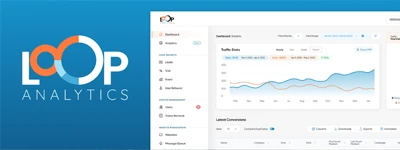
Home Improvement Financing Data Hub
Home improvement financing data hub: OuterBox centralized online and offline data into one universal hub for a 26.9% lift in lead attribution, a 70% conversion-rate increase from funnel-stage personalization, and 2x higher conversions in new email journeys.

AICPA Trust
AICPA Trust used Salesforce Marketing Cloud Personalization for behavior-driven, real-time web experiences: a 70% increase in quote starts, a 40% lift in completed applications, and $143,000+ in projected incremental premiums from one implementation.
Request a Quote for AI Agent Development
Are You Ready to Rank #1
We’ll get back to you within 24 hours, Monday–Friday. Prefer to talk now? Call 1-866-647-9218 (9–5 EST).
Services
"*" indicates required fields

Why Choose OuterBox As Your AI Agent Development Company
Your AI agent development company should also act like an AI development agency: one that understands the systems around the agent, not only the prompt inside it. Agent work can touch web development, analytics, CRM data, ecommerce operations, customer experience, content, SEO, paid media, CRO, reporting, and compliance review.
OuterBox brings those disciplines into one plan. The same team can help define the workflow, design the interface, connect approved data sources, measure the pilot, and support the broader AI development services program when the use case expands beyond a single agent.
20+ Years
Digital Marketing Agency
1000+
Successful Client Partnerships
2M+
Page #1 Google Rankings
300+
USA-Based, In-House Experts
Related AI & Development Services
Related AI And Development Services


AI chatbots and AI agents are stronger together. Chatbots engage and convert; agents automate the work behind the scenes. Explore AI Chatbot Development >
Build An AI Agent Around A Real Workflow
Bring us the workflow your team wants to improve: a sales hand-off, a support queue, a reporting process, a product-data task, an internal knowledge lookup, or a customer action that keeps getting stuck. We can define the use case, review data readiness, plan integrations, build a pilot, and decide what happens after the first release. Prefer to talk it through now? Call (866) 647-9218.
"*" indicates required fields
"*" indicates required fields
AI Agent Development FAQs

What is AI agent development?
AI agent development is the process of planning, building, integrating, testing, and supporting AI systems that can coordinate multi-step work. A business AI agent may retrieve information, use approved tools, draft or route actions, update systems, and escalate cases based on rules your team defines.
How are AI agents different from traditional automation?
Traditional automation follows fixed rules. AI agents can interpret context, retrieve information, decide among approved next steps, and adapt within defined boundaries. The agent still needs guardrails, permissions, logging, and human escalation so flexibility does not turn into uncontrolled behavior.
How are AI agents different from AI chatbots?
AI chatbots primarily hold conversations. AI agents can include conversation, but they are usually built to complete or coordinate workflow steps: look up records, classify requests, trigger actions, route tasks, and document what happened. Some projects need both.
What systems can an AI agent integrate with?
An AI agent can often connect with CRMs, ERPs, helpdesks, ecommerce platforms, analytics tools, content systems, project management tools, internal databases, and proprietary applications when approved APIs or data access patterns exist. The integration plan should respect your current permissions and governance.
How long does AI agent development take?
Timing depends on the use case, data readiness, integrations, user interface, security requirements, testing, and production support needs. A narrow pilot is faster than an enterprise rollout connected to several systems. OuterBox scopes the pilot and scale path before making timeline commitments.
Are AI agents secure and compliant?
AI agents can be designed with security and compliance controls, but the requirements have to be part of the architecture. Access controls, sensitive-data handling, source restrictions, logging, retention rules, human review, and legal or compliance approval should be defined before launch.
Will AI agents replace employees?
AI agents are usually strongest when they reduce repetitive work and help employees move faster. They can handle triage, lookup, drafting, routing, and monitoring tasks, while people stay responsible for judgment, relationship work, approvals, exceptions, and strategy.
How much do AI agent development services cost?
Cost depends on discovery depth, workflow complexity, integrations, data preparation, interface design, security requirements, testing, and support. A simple internal agent, a customer-facing agent, and a multi-system enterprise agent have different scopes. The first step is defining the use case and the systems involved.
Related Articles: AI Agent Development Services

Digital Marketing | 9 min read
For a manufacturing firm, successful digital marketing hinges on the strength of your website. It’s not just whether it can attract traffic (though that’s still…

Digital Marketing | 9 min read
Industrial buyers research for months before contacting anyone. Here’s how to build an inbound program around the manufacturing buying cycle, not against it.

Digital Marketing | 1 min read
A lot of people think of Google Ads as a zero-sum game: You spend more, you make more. That’s not necessarily true. Success in paid…