
Key takeaways
- “Ozempic face” refers to the facial changes, such as sagging skin and increased wrinkles, that can occur due to rapid weight loss with Ozempic.
- Although Ozempic is not FDA-approved for weight loss, doctors sometimes prescribe it off-label for this use. Loss of facial fat, which supports skin elasticity and structure, causes the facial side effects from the drug.
- To help reduce facial side effects, your doctor may want to reduce your Ozempic dosage. Or they may have other suggestions, such as increasing your water and protein intake.
Ozempic is a brand-name medication that’s prescribed to treat type 2 diabetes in adults. Ozempic can decrease appetite. As a result, many people with diabetes who receive the drug lose weight.
Ozempic comes as a liquid solution in prefilled single-patient-use pens. The drug is given as a subcutaneous injection. After a healthcare professional has shown you how to inject Ozempic correctly, you may be able to give yourself the injections at home. Your doctor will typically start with a low dosage of Ozempic and adjust it over time to reach an amount that’s right for you.
Many people use Ozempic without a prescription to try to reach their desired body weight. Ozempic is not approved by the Food and Drug Administration (FDA) for weight management. However, doctors may sometimes prescribe this drug off-label for weight management. (Off-label drug use means prescribing a drug for a purpose other than what it’s been approved for by the FDA.) To learn more, see the “Ozempic off-label use for weight loss” section.
This article will explain the term “Ozempic face,” including how Ozempic affects the face, other possible side effects of the medication, and how to avoid the facial effects of Ozempic.
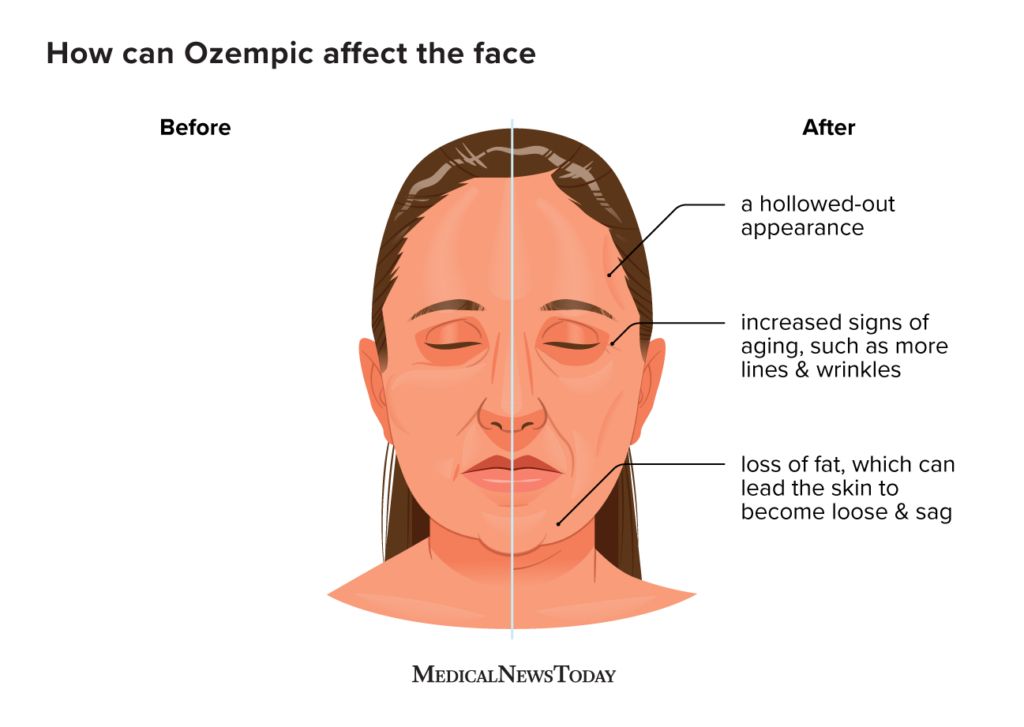
The following illustration can give you a picture of the facial changes that may occur with Ozempic face.
Dr. Paul Jarrod Frank, a cosmetic and celebrity dermatologist, coined the term “Ozempic face” after treating many individuals with this symptom.
How can Ozempic affect the face?
Semaglutide, the generic name for Ozempic, is part of a class of medications known as incretin mimetics. These ensure the pancreas releases sufficient insulin when the blood glucose level is high.
Additionally, Ozempic acts as a long lasting and effective glucagon-like peptide-1 receptor agonist (GLP-1 agonist). This means it makes you feel fuller and delays gastric emptying so you can consume fewer calories.
While Ozempic is safe to use with your doctor’s recommendation, it can cause rapid weight loss that is often more pronounced on the face.
Facial fat serves a protective function and affects facial aesthetics and elasticity. Weight loss can cause dermatological changes and shrinking because the fat that stretches and cushions the skin is no longer in place.
The skin of the face also loses its ability to retract after an episode of rapid weight loss due to reduced levels of elastin and collagen, which are essential for structural integrity. As a result, you may notice facial changes.
Signs of Ozempic face
Using Ozempic may lead to the following facial symptoms:
- increased signs of aging, such as more lines and wrinkles
- loss of fat, which can lead the skin to become loose and sag
- a hollowed-out appearance
- lipodystrophy, which affects how the body accumulates and stores fat
Sometimes, doctors may prescribe Ozempic off-label. This means prescribing a drug for a purpose other than what it’s been approved for by the FDA.
Ozempic may also be prescribed off-label for help with weight management. However, the drug does not have Food And Drug Administration (FDA) approval for this purpose.
Side effects that have been reported with Ozempic can include:
- nausea and vomiting
- flatulence
- constipation
- diarrhea
- abdominal pain
- fatigue
- injection site reactions
In rare instances, you may also experience serious side effects such as:
- vision changes
- kidney problems
- gall bladder disease
- severe allergic reactions
- an increased risk of thyroid cancer
- hypoglycemia (low blood sugar)
- pancreatitis (inflammation of the pancreas)
In some cases, you may be unable to prevent facial side effects from Ozempic. If these are a cause of concern, your doctor may recommend any of the following:
- reducing your dosage
- changing to a different medication
- drinking 1 to 2 liters of water every day
- improving protein intake with a protein-rich diet
- using dermatological fillers
- lifestyle modifications to maintain a healthy weight
If you decide to stop using Ozempic, it can take about 5 weeks from the last dose for the drug to clear from your system.
A
The study found that stopping Ozempic treatment can cause you to regain lost weight.
After you stop using Ozempic, you may also notice the following:
- increased cravings
- an absence of side effects
- blood sugar spikes
You should contact a doctor if you experience any severe side effects from using Ozempic. Be sure to document your symptoms and share them with your doctor.
It’s also important to note that Ozempic has a boxed warning for the risk of thyroid cancer. (A boxed warning is the most serious warning from the FDA.)
Animal studies showed an increased risk of thyroid cancer in animals given semaglutide (the active drug in Ozempic). Animal studies don’t always predict what happens in humans. It isn’t known for certain whether Ozempic increases the risk of thyroid cancer in humans.
While using Ozempic, tell your doctor right away if you have any of the following symptoms:
- difficulty swallowing
- a lump or pain in the neck
- wheezing
- shortness of breath
- a hoarse voice that worsens over time
Here are some frequently asked questions about Ozempic.
Can Ozempic face occur in men?
Yes. Ozempic face may potentially occur in anyone who uses the drug. That’s because Ozempic can cause rapid weight loss, which can be particularly visible in a person’s face. A sudden loss of fat cells can reduce the appearance of smoothness and fullness in the face, resulting in a gaunt appearance.
For more information about how Ozempic may change your face, talk with your doctor.
What does an Ozempic face look like?
It can vary from person to person. Changes in your face may include:
- more lines and wrinkles
- loose and sagging skin due to loss of fat cells
- a hollowed-out appearance
If you have concerns about changes to your face while using Ozempic, talk with your doctor.
Is Ozempic face reversible?
It’s unlikely. When experiencing rapid weight loss, your skin does not always shrink at the same time. A lack of fat cells may also affect skin elasticity. Wrinkles and lines, usually associated with aging, can appear. Those changes don’t go away with time.
If you regain the lost weight, you may notice that some fullness returns to your face. However, if you maintain or continue your weight loss efforts, those facial changes will remain.
Though Ozempic face isn’t considered a medical condition, if you are looking for ways to replace lost volume in your face, dermal fillers or certain cosmetic procedures may useful tools to help you do that.
For more information about how Ozempic can affect your face, talk with your doctor.
Ozempic is a treatment option for people with type 2 diabetes. While Ozempic does not have FDA approval for weight management, doctors may prescribe this drug off-label for chronic weight management among those with overweight or obesity. It can cause rapid weight loss and associated facial side effects that some call “Ozempic face.”
You should only use Ozempic as your doctor recommends. If you experience severe side effects from using Ozempic, your doctor may stop prescribing the medication and recommend lifestyle changes.
When you stop using Ozempic, you may experience increased food cravings, an absence of side effects, and blood sugar spikes. You may also regain any weight they lost while using it.
If you’re interested in using Ozempic for weight loss, which is an off-label use, talk with your doctor. They can help determine whether Ozempic might be a good choice for you.
Disclaimer: Medical News Today has made every effort to make certain that all information is factually correct, comprehensive, and up to date. However, this article should not be used as a substitute for the knowledge and expertise of a licensed healthcare professional. You should always consult your doctor or another healthcare professional before taking any medication. The drug information contained herein is subject to change and is not intended to cover all possible uses, directions, precautions, warnings, drug interactions, allergic reactions, or adverse effects. The absence of warnings or other information for a given drug does not indicate that the drug or drug combination is safe, effective, or appropriate for all patients or all specific uses.