Key takeaways
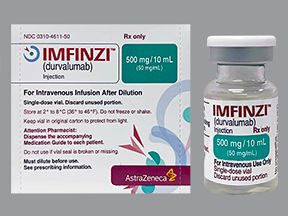
- Imfinzi (durvalumab) is a brand-name drug that’s used for treating certain cancers, including types of lung cancer. It’s given as an IV infusion by a healthcare professional.
- Imfinzi is only available as a brand-name biologic drug. Brand-name biologics typically cost more than generics or biosimilars. However, Imfinzi’s price will depend on your insurance coverage, treatment plan, and whether you qualify for any savings programs.
- Imfinzi’s side effects may vary depending on your specific treatment plan. However, commonly reported side effects include fatigue, nausea, and loss of appetite.
The Food and Drug Administration has approved Imfinzi to treat certain types of the following cancers in adults:
- non-small cell lung cancer
- small cell lung cancer
- biliary tract cancer, including gallbladder cancer
- liver cancer
- endometrial cancer
- muscle-invasive bladder cancer
Depending on the specific condition, Imfinzi may be used on its own or in combination with certain cancer drugs. To learn more, see the “Imfinzi uses” section.
Drug details
Key information about Imfinzi:
- Drug class: PD-L1 inhibitor, a type of immunotherapy drug
- Drug form: IV infusion
- Generic or biosimilar available? no
- Prescription required? yes
- Controlled substance? no
- Year of FDA approval: 2017
Imfinzi contains the active drug durvalumab and is available only as a brand-name medication. Imfinzi is a biologic drug, made using living cells. Imfinzi isn’t currently available in biosimilar form, which is a very similar version of the brand-name biologic drug (the “reference” drug). A generic drug, on the other hand, is an exact copy of a brand-name drug that’s made from chemicals.
It’s not possible for drug companies to produce exact copies of biologics. However, biosimilars are made to treat the same conditions as their parent drug. They’re considered to be as safe and effective as the reference drug. And like generics, biosimilars tend to cost less than brand-name drugs.
Imfinzi can cause mild or serious side effects. The following lists contain some of the key side effects that may occur while receiving Imfinzi. These lists don’t include all possible side effects.
Side effects can differ depending on what type of cancer you’re receiving Imfinzi to treat. They may also differ depending on whether you receive Imfinzi by itself or in combination with certain cancer drugs.
For more information about the possible side effects of Imfinzi, talk with your doctor or pharmacist. They can also give recommendations for how to manage them.
Note: The FDA tracks side effects of drugs it has approved. Sharing your experience helps make medications safer for everyone by giving doctors and researchers more information about how the drug works in real life. If you develop a side effect while receiving Imfinzi and want to tell the FDA about it, visit MedWatch or call 800-FDA-1088.
Mild side effects
Here is a partial list of mild side effects of Imfinzi. To learn about other mild side effects, talk with your doctor or pharmacist or view the drug’s prescribing information.
Mild side effects of Imfinzi can include:
- fatigue
- feeling weak
- cough or shortness of breath
- hair loss
- pain in your muscles or bones
- itchy skin
- nausea, constipation, or diarrhea
- decreased appetite
- fever
- abdominal pain
- upper respiratory infection, such as the common cold
- rash
Most of these side effects may go away within a few days or a couple of weeks. But if they become more severe or don’t go away, talk with your doctor or pharmacist.
Serious side effects
Serious side effects from Imfinzi can occur. Call your doctor right away if you have serious side effects. Call 911 or your local emergency number if your symptoms feel life threatening or if you think you’re having a medical emergency.
Serious side effects and their symptoms can include:
- allergic reaction
- severe immune system reactions
- aplastic anemia
- heart attack
- pancreatitis
- myasthenia gravis
- severe or life threatening reactions to Imfinzi infusions
- serious infections, such as pneumonia
If you have serious side effects, your doctor may have you temporarily stop your Imfinzi treatment. Or they may have you permanently stop Imfinzi and switch to a different treatment.
The FDA approves prescription drugs such as Imfinzi to treat certain conditions. Imfinzi may also be used off-label for other conditions. Off-label use is when a drug that’s approved to treat one condition is used to treat a different condition.
Imfinzi is an immunotherapy treatment, which means it helps the immune system attack cancer cells. The types of cancer doctors usually prescribe Imfinzi to treat are described here.
Imfinzi for non-small cell lung cancer
Imfinzi is FDA approved to treat certain types of non-small cell lung cancer (NSCLC) in adults. NSCLC is the most common form of lung cancer. Specifically, Imfinzi is approved to treat:
- Resectable NSCLC: Imfinzi is used to treat resectable NSCLC tumors — those that can be removed with surgery.* For this use, Imfinzi is given in combination with platinum-based chemotherapy before surgery (known as neoadjuvant treatment) and by itself after surgery (adjuvant treatment).†
- Unresectable NSCLC: Imfinzi is used to treat stage 3 NSCLC that cannot be surgically removed. For this purpose, the cancer must be stable (not growing) or improved after combined treatment with radiotherapy and platinum-based chemotherapy.
- Metastatic NSCLC: Imfinzi is used in combination with tremelimumab-actl (Imjudo) and platinum-based chemotherapy to treat metastatic NSCLC.†
For details about Imfinzi’s clinical trials for treating these types of NSCLC, see the drug’s prescribing information.
If you have questions about whether Imfinzi can be used for your type of NSCLC, talk with your doctor. For more information about NSCLC, see our lung cancer hub.
* Imfinzi is approved to treat stage 2 to select stage 3B tumors (tumors are 4 centimeters [cm] or larger, and cancer may or may not be present in adjacent lymph nodes).
† The cancer must not have any known EGFR or ALK gene mutations. Your doctor will determine whether your cancer has these mutations.
Imfinzi for small cell lung cancer
Imfinzi is FDA approved to treat small cell lung cancer (SCLC) in adults. This form of lung cancer is less common and typically more aggressive than NSCLC. Imfinzi is used to treat limited-stage and extensive-stage SCLC.
With limited-stage SCLC, cancer is present in one lung only and may have spread to lymph nodes on the same side of the chest as the cancer. For this purpose, the cancer must be stable (not growing) after combined treatment with platinum-based chemotherapy and radiotherapy.
With extensive-stage SCLC, cancer has spread widely throughout the lungs and chest or to other parts of the body. Imfinzi is used as a first treatment for extensive-stage SCLC. For this purpose, Imfinzi is used with etoposide and platinum-based chemotherapy.
Imfinzi for biliary tract cancer
Imfinzi is FDA approved to treat biliary tract cancer (BTC) in adults. (The biliary tract produces bile, a substance that aids digestion.) Examples of BTC include gallbladder cancer and bile duct cancer. The cancer is either locally advanced (has spread to a nearby area outside the biliary tract) or metastatic.
For treating these types of biliary tract cancer, Imfinzi is used in combination with the cancer drugs gemcitabine and cisplatin.
In a clinical trial, Imfinzi was found effective for treating the types of BTC described just above. (Note: The trial did not include people with ampullary cancer.)
Imfinzi for liver cancer
Imfinzi is FDA approved to treat unresectable hepatocellular carcinoma (HCC), a type of liver cancer, in adults. For treating this type of HCC, Imfinzi is used in combination with tremelimumab-actl.
Imfinzi for endometrial cancer
Imfinzi is also approved to treat advanced or recurrent endometrial cancer in adults. Advanced cancer refers to stage 3 or stage 4 endometrial cancer. Recurrent means the cancer has come back after previous treatment.
The cancer must also be mismatch repair deficient (dMMR). This means the cancer cells can’t correct their own mistakes in DNA replication. Imfinzi is more effective at treating dMMR cancers than MMR proficient (pMMR) cancers. Your doctor will order genetic tests to determine whether your cancer is dMMR.
Imfinzi is prescribed for dMMR endometrial cancer in combination with carboplatin and paclitaxel.
Imfinzi for bladder cancer
Imfinzi is approved to treat muscle-invasive bladder cancer (MIBC). This is an advanced form of bladder cancer (stage 2 and beyond) that has spread to the bladder’s muscles.
When used for MIBC, Imfinzi is typically prescribed in combination with gemcitabine and cisplatin.
After the first course of treatment, you’ll have a radical cystectomy to remove your bladder and other affected tissue. Then, you’ll resume treatment with Imfinzi on its own, without any other cancer treatment.
Imfinzi and children
Imfinzi isn’t approved for use in children. It’s unknown whether the drug is safe or effective for treating cancer in children.
The safety of Imfinzi for use in children with cancer is currently being studied. However, much more research is needed before it’s known whether the drug could help treat cancers that affect children.
The Imfinzi dosage your doctor prescribes will depend on several factors. These include:
- the type of cancer being treated
- your body weight in kilograms (kg)*
- other medical conditions you may have
- whether you have certain side effects
The following information describes Imfinzi dosages that are commonly used or recommended. However, your doctor will determine the best dosage to fit your needs. Your doctor can also give you dosage information on any drugs you need to take in combination with Imfinzi.
Note: Dosing schedules for cancer treatment, including Imfinzi, are often described using the term “cycles.” A cycle refers to the time from when a dose is given and the period of rest that follows until the next dose.
* For reference, 1 kg is about 2.2 pounds (lb).
Drug forms and strengths
Imfinzi comes as a liquid solution in single-dose vials. It’s available in one strength: 50 milligrams (mg) per milliliter (mL).
Imfinzi vials are available in two sizes:
- 120 mg/2.4 mL
- 500 mg/10 mL
Imfinzi is given as an IV infusion by a healthcare professional. With IV infusions, the drug is slowly injected into a vein over a certain period of time. Imfinzi infusions typically take 1 hour. You’ll receive your infusions at a doctor’s office or in a hospital or infusion center.
What if I miss a dose?
It’s important to keep your appointments for your Imfinzi infusions. If you miss an appointment, call your doctor’s office right away to reschedule. To help make sure you don’t miss an appointment, try setting a reminder on your phone.
Will I need to use this drug long term?
Imfinzi is meant to be a long-term treatment. If you and your doctor determine that Imfinzi is safe and effective for you, you’ll likely take it long term.
Some exceptions are noted in the following table:
| Type of cancer | Maximum length of treatment |
|---|---|
| resectable NSCLC | 12 cycles after surgery (about 48 weeks) |
| unresectable stage 3 NSCLC | 12 months |
If you’re receiving Imfinzi treatment for other types of cancer, talk with your doctor about your treatment plan.
As with all medications, the cost of Imfinzi can vary. The actual price you’ll pay depends on your insurance coverage, your location, and the medical facility where you receive your Imfinzi doses.
Financial and insurance assistance: If you need financial support to pay for Imfinzi, or if you need help understanding your insurance coverage, help is available.
Imfinzi’s manufacturer, AstraZeneca, offers a program called Access 360. For more information and to find out if you’re eligible for support, call 844-ASK-A360 (844-275-2360) or visit the program website.
Generic or biosimilar version: Imfinzi is a biologic drug. It’s not currently available in biosimilar form. Biosimilar drugs are made to treat the same conditions as their parent drug. They are considered to be as safe and effective as the parent drug. Biosimilars tend to cost less than their brand-name drugs. To learn more, see the earlier section, “Imfinzi generic or biosimilar.”
Before approving coverage for Imfinzi, your insurance company may require you to get prior authorization. The insurance company will review the prior authorization request and decide whether the drug will be covered.
If you’re not sure whether you’ll need to get prior authorization for Imfinzi, contact your insurance company.
Here are answers to some frequently asked questions about Imfinzi.
How long does Imfinzi stay in your system?
Imfinzi stays in your system for about 3 months after your last dose. The drug is slowly broken down by your body over this time.
For what length of time can you receive Imfinzi?
If you and your doctor think that Imfinzi is safe and effective for you, you can stay on the treatment for as long as it continues to work for your cancer. However, for some types of NSCLC, Imfinzi is approved to be used for up to 1 year only. For details, refer to the Imfinzi dosage section earlier in this article.
How long Imfinzi will work for you depends on various factors. These include the type and stage of cancer you have, whether you get certain side effects, other treatments you may have, and your overall health. Your doctor may be able to provide more information about how long you may receive Imfinzi.
Is Imfinzi chemotherapy?
No, Imfinzi isn’t chemotherapy. It’s a type of treatment called immunotherapy.
Chemotherapy works by directly killing cancer cells in the body that are multiplying rapidly. Immunotherapy, on the other hand, works by helping your immune system attack cancer cells. For more information, see “How Imfinzi works.”
Will Imfinzi cure my condition?
No, Imfinzi won’t cure your cancer. There’s currently no known cure for cancer. However, Imfinzi can help extend the length of time you live without your cancer getting worse.
Talk with your doctor if you have questions about life expectancy with Imfinzi.
You may wonder how Imfinzi compares with other medications prescribed for similar uses. Here we look at the difference between Keytruda (pembrolizumab) and Imfinzi.
Forms
Imfinzi and Keytruda both come as a liquid solution given as an IV infusion by your doctor or another healthcare professional. Imfinzi infusions typically last 1 hour, while Keytruda infusions usually last 30 minutes. Imfinzi infusions are typically given once every 2, 3, or 4 weeks. Keytruda infusions are usually given once every 3 or 6 weeks.
Uses
Both Imfinzi and Keytruda are approved to treat certain types of:
- non-small cell lung cancer (NSCLC)
- small cell lung cancer (SCLC)
- biliary tract cancer
- liver cancer
- endometrial cancer
- bladder cancer
Each drug is also approved to treat other types of cancer. For more information, talk with your doctor about which treatment is right for you.
Side effects and risks
Imfinzi and Keytruda have some similar side effects and others that vary.
Mild side effects
This list contains up to 10 of the most common mild side effects that can occur with both Imfinzi and Keytruda (when taken individually).
- fatigue
- feeling weak
- pain in your muscles or bones
- constipation, diarrhea, or nausea
- decreased appetite
- rash
- cough
- shortness of breath
Serious side effects
These lists contain examples of serious side effects that can occur with Imfinzi and Keytruda (when taken individually).
- pneumonitis
- hepatitis (inflammation in your liver)
- colitis
- nephritis, which can lead to kidney failure
- inflammation in other organs, such as your eyes, heart, nerves, brain, joints, muscles, and blood vessels
- hormone problems, such as thyroid, adrenal, or pituitary gland disorders
- type 1 diabetes
- severe skin reactions
- pneumonia
- severe or life threatening reactions to the infusion
- allergic reaction
As with Keytruda, Tecentriq (atezolizumab) has uses similar to those of Imfinzi. Here’s a comparison of how Imfinzi and Tecentriq are alike and different.
Forms
Imfinzi and Tecentriq both come as a liquid solution given as an IV infusion by a doctor or another healthcare professional. Imfinzi infusions typically last 60 minutes, while Tecentriq infusions usually last 30 to 60 minutes. Both Imfinzi and Tecentriq infusions are typically given once every 2, 3, or 4 weeks.
Uses
Both Imfinzi and Tecentriq are approved to treat certain types of:
- non-small cell lung cancer (NSCLC)
- small cell and non-small cell lung cancer (SCLC)
- liver cancer
Each drug may also be approved for the treatment of other types of cancer. For more details, talk with your doctor.
Side effects and risks
Imfinzi and Tecentriq have some similar side effects and others that vary. Here are examples of these side effects.
Mild side effects
These lists contain up to 10 of the most common mild side effects that can occur with both Imfinzi and Tecentriq (when taken individually).
- hair loss
- fatigue
- feeling weak
- cough
- shortness of breath
- rash
- nausea, diarrhea, or constipation
- decreased appetite
- pain in your muscles or bones
Serious side effects
This list contains examples of serious side effects that can occur with both Imfinzi and Tecentriq (when taken individually).
- pneumonitis
- hepatitis (inflammation in your liver)
- colitis
- nephritis, which can lead to kidney failure
- inflammation (swelling or damage) in other organs, such as your eyes, heart, nerves, brain, joints, muscles, and blood vessels
- hormone problems, such as thyroid, adrenal, or pituitary gland disorders
- type 1 diabetes
- severe skin reactions
- severe or life threatening reactions to the infusion
- serious infections, such as pneumonia
- allergic reaction
Costs
The actual price you’ll pay for Imfinzi or Tecentriq depends on several factors, such as whether you have insurance and your location.
Imfinzi and Tecentriq are brand-name biologic drugs that aren’t currently available in generic or biosimilar form. Biosimilars tend to cost less than brand-name drugs. To learn more about biosimilars, see the “Imfinzi generic or biosimilar” section.
Imfinzi is called an immunotherapy drug. These types of drugs help your immune system attack cancer cells.
Other drugs are available that can treat your condition. Some may be a better fit for you than others. If you’re interested in finding an alternative to Imfinzi, talk with your doctor. They can tell you about other medications that may work well for you.
Examples of other immunotherapy drugs that may be used for the indicated cancer are listed in the following table:
| Type of cancer | Alternatives to Imfinzi |
|---|---|
| non-small cell lung cancer | • atezolizumab (Tecentriq) • nivolumab (Opdivo) • pembrolizumab (Keytruda) |
| small cell lung cancer | • atezolizumab (Tecentriq) • ipilimumab (Yervoy) • nivolumab (Opdivo) • pembrolizumab (Keytruda) |
| biliary tract cancer | • pembrolizumab (Keytruda) |
| liver cancer | • atezolizumab (Tecentriq) • ipilimumab (Yervoy) • nivolumab (Opdivo) • pembrolizumab (Keytruda) |
| endometrial cancer | • pembrolizumab (Keytruda) • dostarlimab-gxly (Jemperli) |
| bladder cancer | • pembrolizumab (Keytruda) |
When Imfinzi is used to treat unresectable stage 3 non-small cell lung cancer (NSCLC) or limited-stage small cell lung cancer (SCLC), it’s given on its own.
The following table lists drugs that are usually prescribed with Imfinzi for the other cancers Imfinzi treats. Note that these drugs are usually taken with Imfinzi early in treatment. Eventually, Imfinzi is given on its own.
| Type of cancer | Drugs used in combination with Imfinzi |
|---|---|
| resectable NSCLC | combination of a platinum-containing chemotherapy, including carboplatin or cisplatin, and either paclitaxel, pemetrexed, or gemcitabine, depending on certain features of the tumor |
| metastatic NSCLC | tremelimumab-actl (Imjudo), carboplatin, and one of the following: cisplatin, pemetrexed, gemcitabine, or nab-paclitaxel |
| extensive-stage SCLC | etoposide and either carboplatin or cisplatin |
| biliary tract cancer | gemcitabine and cisplatin |
| liver cancer | tremelimumab-actl |
| endometrial cancer | carboplatin and paclitaxel |
| bladder cancer | gemcitabine and cisplatin |
In rare cases, people who received Imfinzi with other cancer medications experienced a side effect that led to death. Examples of these side effects include pulmonary embolism, liver damage, and sepsis. It isn’t known what role, if any, Imfinzi had in causing these side effects, or whether they could have been caused by the other cancer drugs.
Talk with your doctor if you’re concerned about your risk of developing serious side effects during your Imfinzi treatment.
Different drug interactions can cause different effects. For instance, some interactions can interfere with how well a drug works. Other interactions can increase side effects or make them more severe.
Imfinzi and other medications
Imfinzi isn’t known to interact with other medications. However, before starting Imfinzi, talk with your doctor and pharmacist. Tell them about all prescription, over-the-counter, and other drugs you take. Also tell them about any vitamins, herbs, and supplements you use. Sharing this information can help you avoid potential interactions.
If you have questions about drug interactions that may affect you, ask your doctor or pharmacist.
Imfinzi and herbs and supplements
There aren’t any herbs or supplements that have been specifically reported to interact with Imfinzi. However, you should still check with your doctor or pharmacist before using any of these products during Imfinzi treatment.
Imfinzi and foods
No foods have been specifically reported to interact with Imfinzi. If you have any questions about eating certain foods with Imfinzi, talk with your doctor.
Imfinzi and alcohol
Imfinzi isn’t known to interact with alcohol. However, if you get certain side effects with Imfinzi, drinking alcohol could make them worse. Examples of these side effects include fatigue and nausea.
If you drink alcohol, talk with your doctor about how much is safe to drink during your Imfinzi treatment.
Imfinzi is FDA approved to treat certain types of cancer in adults.
What happens with certain types of cancer
Cancer occurs when cells in your body develop a genetic change that makes them start to grow and multiply uncontrollably. Your immune system usually notices these atypical cells and quickly attacks and destroys them. However, some cancer cells develop certain genetic changes that make them more able to survive.
With certain types of cancer, the cancerous cells have developed a way of hiding themselves from your immune system. These cancer cells produce a protein called programmed cell death ligand-1 (PD-L1) on their surface.
The PD-L1 protein is found on the surface of healthy cells. It’s known as an immune checkpoint because it marks healthy cells to stop your immune system from attacking them. When cancer cells have this protein on their surface, it hides them from your immune system. This allows the cancer cells to grow, multiply, and spread without your immune system stopping them.
What Imfinzi does
Imfinzi is a type of drug called an immune checkpoint inhibitor. It works by attaching to the PD-L1 protein and blocking it. This allows your immune system to find and destroy the cancer cells. It can help shrink certain tumors in your body.
How long does it take to work?
Imfinzi starts to work as soon as you have your first treatment. However, you’re unlikely to feel it working in your body. This is because it shrinks tumors, but it may not relieve the symptoms of your cancer.
Your doctor will order various tests throughout your treatment to check that Imfinzi is working for you.
What happens after Imfinzi treatment?
After you finish Imfinzi treatment, your doctor will continue to monitor you and may adjust your treatment plan. Any adjustments will depend on your specific condition, how your body responds to Imfinzi, and other treatments you have received.
In most cases, you’ll likely need to have certain imaging tests, such as a PET scan, to check for cancer growth. Your doctor can tell you more about the tests you may receive and other details of your treatment plan.
If you can become pregnant, consider the following information about pregnancy, fertility, birth control, and breastfeeding.
Imfinzi and pregnancy
Imfinzi is not safe to receive during pregnancy. Although it has not been studied in pregnant people, the way this drug works could cause the immune system to harm a fetus. Animal studies of Imfinzi found the drug could cause pregnancy loss or stillborn offspring.
If you can become pregnant, your doctor will give you a pregnancy test before you start Imfinzi treatment and recommend using an effective form of birth control during the treatment.
If you’re pregnant or planning to become pregnant, talk with your doctor before starting Imfinzi. They will likely recommend a medication other than Imfinzi to treat your cancer.
Imfinzi and birth control
Imfinzi is not safe to receive during pregnancy. If you’re sexually active and you or your partner can become pregnant, talk with your doctor about your birth control needs while you’re receiving Imfinzi.
Imfinzi and breastfeeding
It’s not known whether Imfinzi passes into breast milk or whether it affects breast milk production. However, it’s possible that Imfinzi could cause serious side effects in a child who is breastfed. Because of this, you should avoid breastfeeding while receiving this drug and for at least 3 months after your last dose.
If you’re currently breastfeeding, talk with your doctor about the best way to feed a child during your Imfinzi treatment.
This drug comes with several precautions. Before starting Imfinzi treatment, talk with your doctor about your health history. Imfinzi may not be right for you if you have certain medical conditions or other factors affecting your health. These include:
- Autoimmune disease: Autoimmune diseases occur when your immune system mistakenly attacks healthy cells in your body. Examples of these conditions include Crohn’s disease, lupus, myasthenia gravis, and Guillain-Barré syndrome. Imfinzi treatment can sometimes cause your immune system to attack healthy cells in your body. So it could worsen an autoimmune disease. If you have an autoimmune disease, talk with your doctor about whether Imfinzi is right for you.
- Past organ or stem cell transplant: Imfinzi can cause your body to react and attack certain organs, including your heart, lungs, liver, or kidneys. If you’ve received an organ transplant or a stem cell transplant, be sure to tell your doctor before starting Imfinzi. Your body could reject the transplanted organ or stem cells, even if you’ve received treatment to help stop this reaction.
- Breathing or liver problems: Side effects of Imfinzi can include damage to your lungs or liver. If you have a history of breathing or liver problems, talk with your doctor before starting Imfinzi.
- Previous radiation treatment: Having radiation treatment before receiving Imfinzi may increase your risk of serious inflammation in the lungs. If you’ve received radiation to your chest area, tell your doctor before you start Imfinzi. They may want you to delay your Imfinzi treatment until the effects of the radiation have worn off.
- Infection: Make sure you tell your doctor if you’re receiving treatment for an infection before you start receiving Imfinzi. Your doctor will wait until the infection is completely cleared to start Imfinzi.
- Pregnancy: Imfinzi is not safe to receive during pregnancy.
- Breastfeeding: Imfinzi may not be safe to receive while breastfeeding.
Note: For more information about the potential negative effects of Imfinzi, see the “Imfinzi side effects” section.
Disclaimer: Medical News Today has made every effort to make certain that all information is factually correct, comprehensive, and up to date. However, this article should not be used as a substitute for the knowledge and expertise of a licensed healthcare professional. You should always consult your doctor or another healthcare professional before taking any medication. The drug information contained herein is subject to change and is not intended to cover all possible uses, directions, precautions, warnings, drug interactions, allergic reactions, or adverse effects. The absence of warnings or other information for a given drug does not indicate that the drug or drug combination is safe, effective, or appropriate for all patients or all specific uses.