Drones will not replace officers, says police chief

Norfolk Constabulary says a five-week trial of a new scheme will enhance the force's ability to respond quickly and effectively to incidents
- Published
Police officers will not be replaced by drones according to the person leading the trial of the technology nationally.
It comes as Norfolk Police announces it will use the technology in a five-week trial to respond to some 999 calls.
Civil liberties groups have raised concerns about the data that will be collected during the flights.
Supt Taryn Evans, who is running the project for the National Police Chiefs' Council (NPCC), said the airborne camera equipment would be used "where eyes in the sky will add value".

Supt Taryn Evans, from the NPCC, says the intention is not to reduce the number of police officers
Norfolk Police is one of six forces testing out the use of drones as first responders, although they have been using the aerial camera equipment in other ways since 2017.
Supt Taryn Evans, the NPCC's lead for drones, said she wanted to see the technology rolled out in suitable towns and cities within three years.
She said first responder drones should be able to get overhead within about 60-90 seconds of a call, capturing early evidence and preparing officers for going in, "which makes them safer".
It would not be used in all circumstances, but rather for situations "where eyes in the sky will add value," she said.
When asked if the technology would ever replace police officers on the front line, she said that was "definitely not" the intention.
"If it still requires a person, we will get a person. It will get the most appropriate resource," she said.

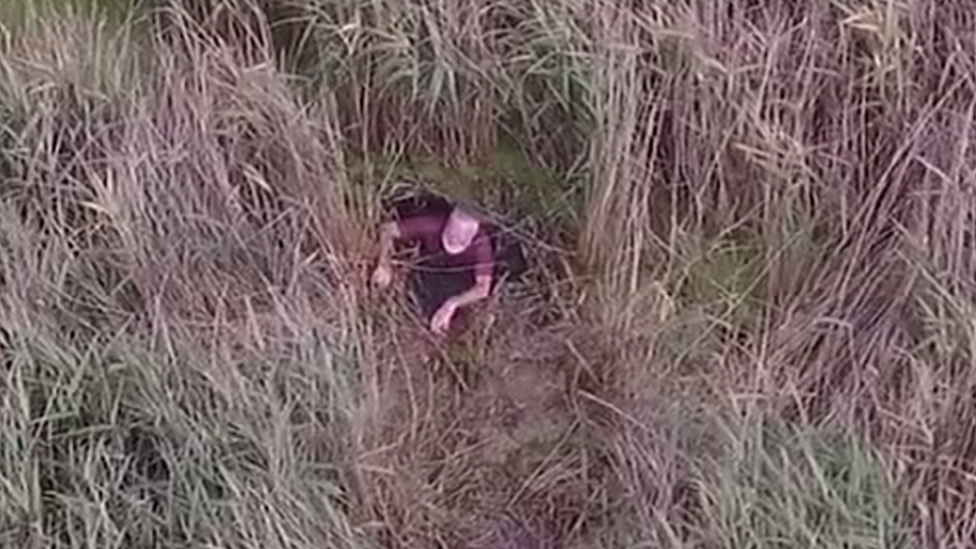
During the trial, drones based in Norwich, Thetford, Great Yarmouth and King's Lynn are being deployed remotely to provide a live aerial view
A civil liberties and privacy campaigning organisation said it was worried the drones would film people indiscriminately.
Jake Hurfurt, from Big Brother Watch, said they were concerned police forces were rolling out drones without publishing policies on how people's privacy would be protected.
"Once again, we've seen the police act first, invest in new technology without thinking about what information is going to put out for the public, and informing the public about how their rights will be protected," he said.
Norfolk Police said the force was "keen to reassure communities that all drone deployments will be conducted within strict legal and regulatory frameworks".
Evans said that if captured footage could be used as evidence, it would be kept, but if it was not used, it would get deleted after 28 days — the same way as body-worn video footage.
Robby West looks at the "drones as first responders" trial
Get in touch
Do you have a story suggestion for Norfolk?
Follow Norfolk news on BBC Sounds, Facebook, external, Instagram, external and X, external.
- Published19 November 2023

- Published9 January 2020

- Published19 June 2018